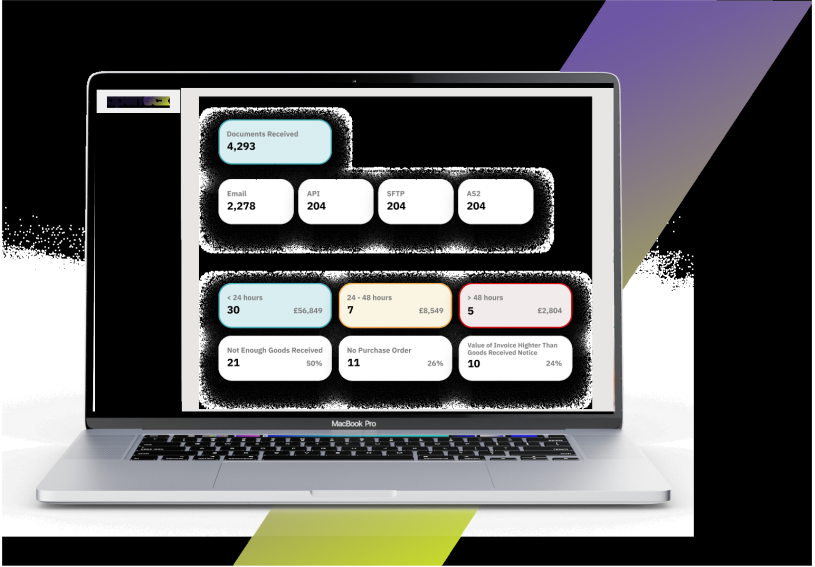
SIG is an international industry-leading supplier of specialist insulation and building products. With over 75,000 customers, 440 branches, and an annual turnover of £2.7bn, the business is a central and valued distributor across the construction supply chain in the UK and across Europe.Establishing and maintaining strong working relationships across their supply chain is fundamental to SIG's projects and successes. With this in mind, the business identified that their current processes were not efficient enough. The business processes around 300,000 transactions annually, and improvements in this area would pass considerable benefits onto their customers.
SIG used traditional EDI to process a large number of their incoming supplier invoices, but using this technology, it was taking up to two weeks for their branches to process the transactions. SIG identified this as a significant issue, as it created problems with cash flow and forecasting, ultimately leading to payment delays to suppliers.
SIG also recognised that the complexity of their business, built through various acquisitions, was not well suited for traditional EDI. Each subsidiary had to be set up as a separate entity, creating a level of cost and administrative complexity that was becoming increasingly difficult to justify.
Traditional EDI was taking up to two weeks for branches to process transactions, creating serious cash flow and forecasting problems and consistently delaying payments to suppliers.
SIG's complex structure, built through acquisitions, meant each subsidiary had to be set up as a separate EDI entity, multiplying cost and administrative overhead across the business.
Processing 300,000 transactions annually through a system that couldn't keep pace was creating downstream problems across the entire supply chain relationship.